Turning a neglected hundred year old garden around, whilst maintaining its character allowed for it to be re-purposed as a series of outdoor living spaces surrounding the main 1909 heritage home. The driveway was converted into a vegetable garden and the derelict pool area into a low maintenance eco-pool linked to a new covered patio space. Social interaction and outdoor living in previous dead areas of the garden were successfully created with privacy for the various tenants in mind.
The front garden and parking areas were conceived as a series of hedged spaces, with gravel pathways and a typical English style entrance garden in acknowledgement of the manor house’s historical architecture.
Building a new- or converting your existing swimming pool into a sustainable natural pool makes sense on all levels.
Eco pools do not use any chemicals. It utilises aquatic plants and a filtration system to clean the water as a mini ecosystem. The pool is composed of two separate but connecting areas: a swimming area and a regeneration area. The regeneration area is where the aquatic plants reside and clean the water. A filtration system captures large debris and circulates the water. The filtration system can also be run off of solar power to allow for an off-grid power saving option.
Daniel van der Merwe initiated, directed and co-ordinated the PPC imaginarium from its inception until its suspension in 2019 due to financial constraints. The PPC Imaginarium became firmly entrenched as the largest platform to support, mentor, profile and educate emerging young creative entrepreneurs towards job creation.
It was worldwide recognised as a unique outreach and brand capacitating project spanning across 6 creative disciplines, whilst branding and promoting the use of Portland cement. As such it has won several national awards in recognition of its wide impact.
Rosendal in the Eastern Free State has a high -altitude alpine climate. Drought cycles and extreme temperatures with up to minus 15 degrees C, snow, hail and frost makes this a difficult area for sustainable landscaping. The design approach was to first create a protected micro climate by using fencing covered with fast growing evergreen creepers, evergreen tree hedges and tree canopies to divide the site into protected enclosures. Low maintenance grassed meadows are interspersed with hardy evergreen accents and combined with endemic and indigenous drought resistant planting. Grey water is channeled into the herb and edible garden areas. Rainwater is channeled into a storage pond which also acts as a duck pond and reflective water feature. Ornamental planting is supplemented with medicinal, fruit bearing and crop planting to contribute towards a ‘living off the land’ sustainable landscaping approach.
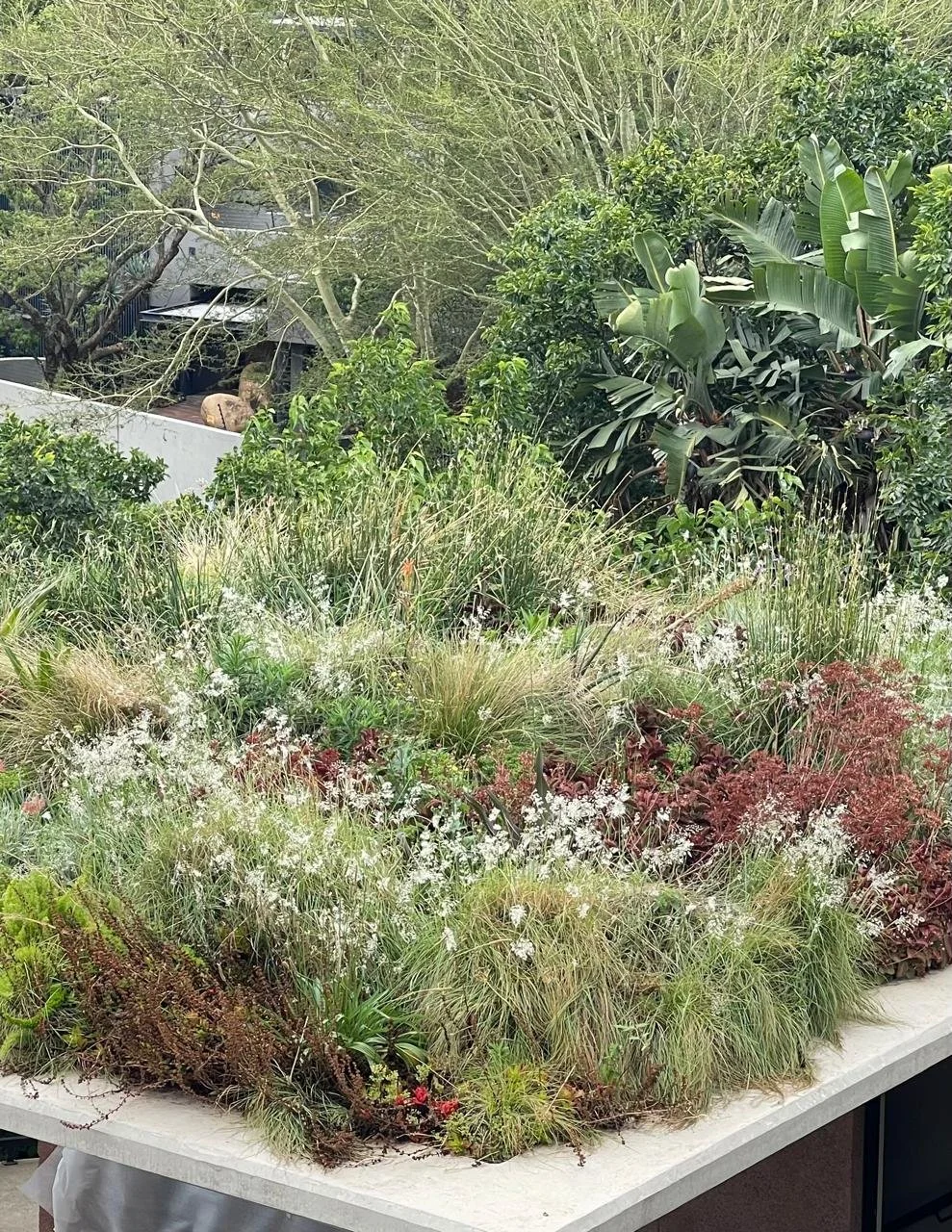
We see living roofs as an opportunity to expand the landscape on a site. A green roof has many benefits at economic, ecological and aesthetic levels. A green roof provides a rainwater buffer, purifies the air, reduces the ambient temperature, regulates the indoor temperature, saves energy and encourages biodiversity and wildlife on the site. Green roofs make sense as climate-proof construction.
A Landscape of Meaning: Reconnecting Place, Spirit, and Ecology
In the quiet rhythm of indigenous landscapes, the sacred and nature are not separate—they are entwined. Ethnobotanical landscaping, rooted in traditional ecological knowledge, offers more than aesthetic restoration; it is a profound act of healing, reconnection, and reverence. By restoring indigenous ecologies, we do not merely replant flora—we reawaken relationships between people, place, and spirit.
At its heart, ethnobotany is the study of how cultures interact with plants: for medicine, sustenance, ritual, and storytelling. When applied to landscape design, it becomes a tool for cultural and ecological restoration. It invites us to ask: What plants once thrived here? What stories did they carry? What relationships did they nurture? In answering these questions, we begin to restore not only biodiversity but memory.
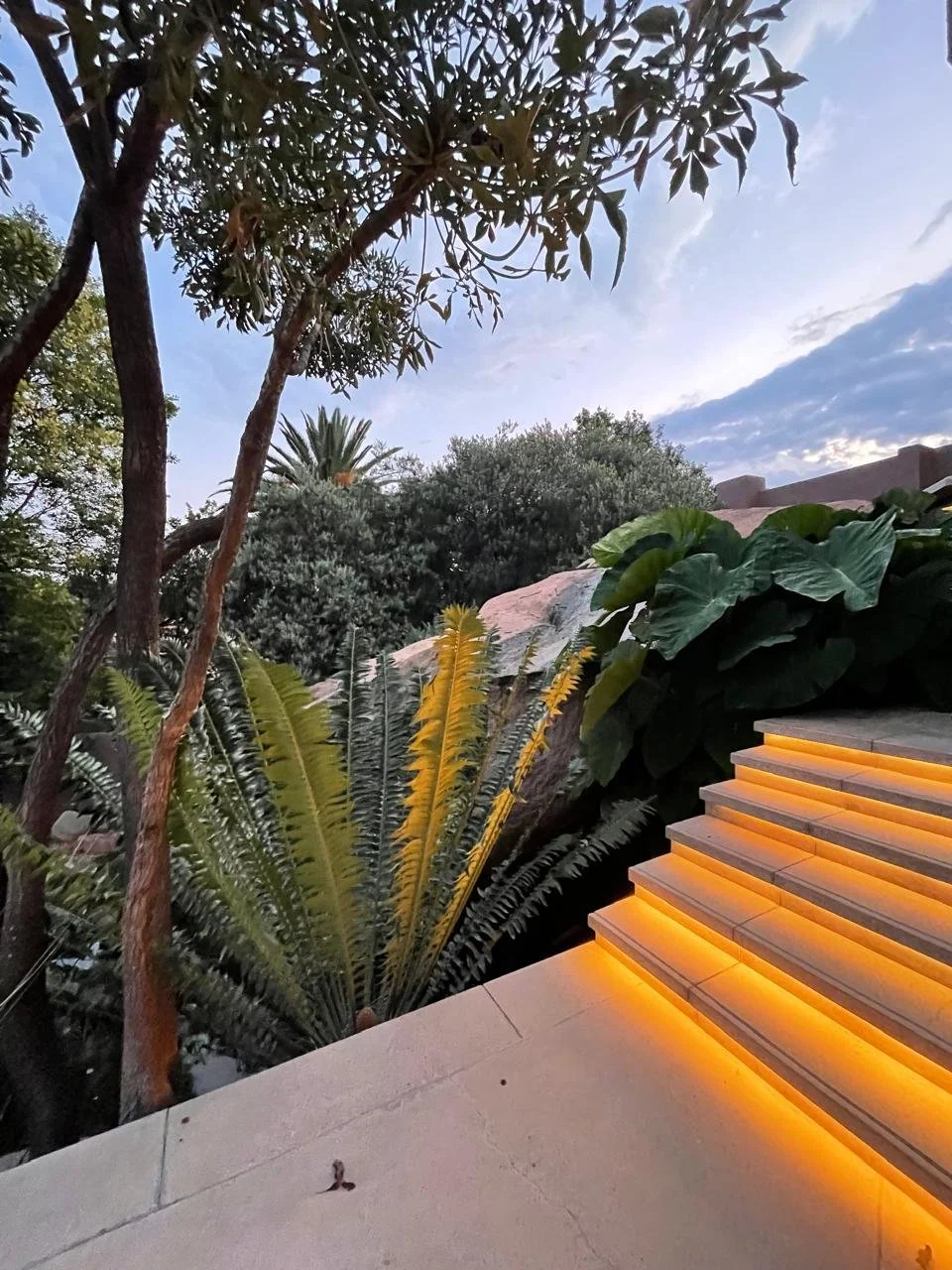
Reintroducing indigenous plant species revives ecological balance. Indigenous plants attract pollinators, stabilize soil, and support the return of birds, insects, and small mammals that once called the site home. But beyond ecological function, these plants carry ancestral significance. They are living archives of ceremony, healing, and identity. Their presence transforms the landscape into a place of remembrance and belonging.
This reconnection with Place is not merely physical—it is spiritual. As the land heals, so do we. The wholeness of an indigenous ecology instils feelings of gratitude, protection, and tranquillity. These are not incidental emotions; they are the very qualities people associate with sacredness. A landscape that honours its past becomes a sanctuary in the present—a space where memory and meaning converge.
Ethnobotanical landscaping also challenges the norms of landscape architectural practice. It is about rehabilitation rather than to impose and where design becomes dialogue. The land is not a blank canvas—it is a living partner. In this way, the process itself becomes sacred.
In restoring indigenous ecologies, we do not seek to recreate a static past. Instead, we cultivate a dynamic harmony between past and present. The sacred is not locked in history—it is alive in the soil, the seeds, the stories. Ethnobotanical landscapes become bridges: between generations, between species, between the visible and the invisible.
Ultimately, this approach to landscaping is an invitation—to remember, to protect, to participate. It is a call to design with reverence, to see the land not as property but as kin. In doing so, we create spaces that are not only biodiverse but spiritually resonant. Spaces where people feel held, inspired, and connected.
In a world increasingly fragmented, ethnobotanical landscaping offers a path toward wholeness. It reminds us that the sacred and nature go together—and that healing the land is inseparable from healing ourselves.